Pages

.

Showing posts with label Books. Show all posts

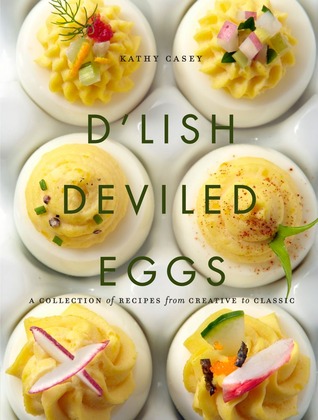
D'Lish Deviled Eggs!

D'Lish Deviled Eggs
A Collection of Recipes from Classic to Creative
by Kathy Casey

Hardcover, 160 pages


I love deviled eggs. I don't think I have ever met one that I didn't love. And one of the fabulous things about them are how versatile they are. Sure, I've made a few different types in my life, but never so varied and creative as the 50(!) recipes that Kathy Casey has presented here in this book dedicated to the deliciousness that is the deviled egg.

Kathy sees eggs as the perfect blank slate for flavour. And not just chicken eggs - she shows you how to cook the perfect duck and even quail egg too! (But most recipes are for regular chicken eggs)

You'll find classic recipes like grandma used to make plus more worldly recipes like Thai Curry-Spiced Deviled Eggs with Shrimp, California Roll Deviled Eggs, or how about a Dirty Martini Deviled Egg?

You'll be the hit of every party with your savvy deviled egg know-how, there's even a Large Batch Deviled Eggs Recipe Template. You know, in case I am coming over.
Biography
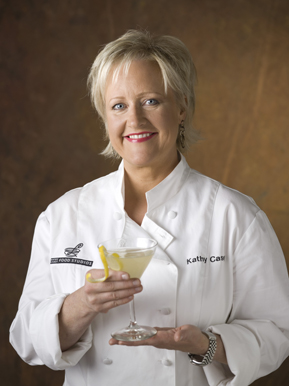
Kathy Casey is a celebrity chef, mixologist and pioneer in the bar-chef movement.

She played a key role in bringing Northwest cuisine and women chefs to national prominence and, as one of the first female executive chefs in the United States, she was named one of Food & Wine's "hot new American chefs." She has also been touted as being the original Bar Chef.

A savvy spotter of what's hot in the culinary and cocktail scene, Kathy is a frequent TV and radio guest and speaker on trends. She has been featured in numerous national publications, including Esquire, USA Today, Fortune, People Magazine, Cheers, Food Arts, Food & Wine, Gourmet, Time Out, the San Francisco Chronicle, the New York Times and the Wall Street Journal. She has appeared on such shows as CNN, Good Morning America, Food Network's Unwrapped, the Travel Channel's Cooking Across America, the Larry King Show, Fine Living's Great Cocktails, CBS This Morning and Northern Exposure. You can often catch her on television as a frequent guest chef, mixologist and entertaining expert. Her cocktail show Kathy Casey's Liquid Kitchen™ on Small Screen Network mixes her talent behind the bar and experience as a chef into a creative journey through great drinks inspired by the kitchen. Her radio segment Dishing with Kathy Casey airs weekends on Seattle's KOMO news radio.

Kathy is the owner of Kathy Casey Food Studios® - Liquid Kitchen™, an international agency specializing in delicious creativity: food, beverage and restaurant/hospitality concept consulting, innovation and development; product development; and food and beverage photography, as well as spokesperson work and promotions through social media. Clients such as Fairmont Hotels & Resorts, Ritz Carlton, Mandarin Oriental Hotels, Marriott Hotels, Cheesecake Factory, California Pizza Kitchen, Minute Maid, Sunset Produce, Cuties Citrus, Wonderful Pistachios, Almond Accents, Paramount Citrus, Alaska Seafood Marketing, Costco, Holland America Line, Unilever, Monterey Gourmet Foods, Darden Restaurant Group, IHOP, Brinker International, TGI Friday's, Pappas Restaurants, iSi North America, Cinnabon, and Monin Gourmet as well as spirit companies such as Purity Vodka and Beam, Inc. have sought her development skills, advice and expertise.

Kathy also owns Dish D'Lish® "Food to Go-Go" ® cafes as well as Dish D'Lish branded retail and food-service specialty food products and cocktail mixers.

An accomplished writer, she is the author of ten cookbooks, including the James Beard Award-nominated Kathy Casey's Northwest Table. Her newest book is D'Lish Deviled Eggs. Kathy wrote her feature column "Dishing with Kathy Casey" for the Seattle Times for 12 years; now you can catch her latest Dishing adventures on her blog. Casey also pens the feature column "Shake Swizzle & Stir" for Sip NW magazine and blogs for "Ask the Expert Mixologist" for Food Network Canada as well as Amazon.com. She is also a yearly contributor for the Food & Wine Cocktails annual recipe book.

Kathy was lauded as one of the 50 Best Twitter Chefs by Guide to Culinary Schools; her blog Dishing with Kathy Casey was included in Saveur.com's Sites We Love. Kathy is a frontrunner in social media and, when not dreaming up "the next big thing," she can be found foraging for wild mushrooms, shaking up cocktails with ingredients from her urban garden ... or Twittering way too much.

Catch Kathy on Twitter (@KathyCaseyChef) or blogging at www.dishingwithkathycasey.com or find Sips & Apps and D'Lish Deviled Eggs on Facebook. Watch her cocktail show, Kathy Casey's Liquid Kitchen, on www.liquidkitchen.tv.

For more information, visit www.kathycasey.com or contact info@kathycasey.com

reade more... Résuméabuiyad

Bookstravaganza!


A glimpse inside book publishing's most glamorous event.
reade more... Résuméabuiyad

Jam Fantans!

So far this year there have been a lot of changes in my life. And we are only two weeks into the new year!

One child moved out, another moved back in - bringing with him a giant dog. Actually, he is fitting in pretty nicely, even my shih tzus like him. I don't even mind walking him in the early morning, but then again it has been pretty mild this winter. Ask me again when the temps drop.

My food blog turned food/book blog over the years and recently I made the commitment to full book blogging. Did I ever mention how much I love books? A lot. I have been known to smell them in bookstores and especially used bookstores. Maybe one day e-readers will come with scent boosters for those of us who miss book-smell. But for now I prefer good old paper books. I like the tactile feel and of course the smell.

Which is not to say that I don't also love the smell of fresh baked bread - that is definitely a favourite. And even though I slightly over-baked these Jam Fantans - they smelled and tasted divine.

Elle is our Hostess Babe of the month and presented this jammy goodness as a winter treat. Everyone had fun subbing in their own filling so I did the same - I used the Italian Prune and Cardamom Conserve, from The Blue Chair Jam Cookbook by Rachel Saunders. (Below)

I don't know yet where the fantan recipe comes from - but when I do I'll let you know.

(And if you'd like to know about what bread books I use - check out the list on my sidebar.)

I am a bit of an everyone into the pool baker, and basically threw everything I needed into the mixer, starting with the smaller amount of flour and adding in the rest as it needed. 

My kitchen is not warm, so I gave the dough 2 hours for each rise. We then sat down for a congratulations party for my son (who found a job in town) and proceeded to forget that I had stuff in the oven. Now would be the time that I would normally blame my husband for not replacing my timer batteries.... but he had done so 2 weeks ago and I have nobody to blame but myself. Luckily - the fantans are very fragrant and let me know to take them out of the oven. A little crispy around the edges but still delicious. 

Elle's Kitchen
Sweet Orange Marmalade Fantan Rolls
Recipe and prep photos below 

provided by Bread Baking Babe Elle

and she will soon have the recipe posted with information 
on how you can be a Bread Baking Buddy! 

Makes 12 rolls

Equipment
stand mixer with hook attachment (or mixing bowl and wooden spoon)
large mixing bowl, lightly coated with cooking spray (or clean, if you prefer)
12 cup standard muffin tin, buttered

Ingredients
3-4 cups all-purpose flour, divided
1 cup whole wheat bread flour 1 teaspoon salt
¼ teaspoon freshly ground nutmeg
1 cup whole wheat sourdough starter OR 1 package of RapidRise yeast mixed with ¼ cup warm water
Elle's Kitchen
1 cup non fat evaporated milk
¼ cup (1/2 stick) butter
¼ cup pure maple syrup
¼ cup egg substitute OR 1 egg, lightly beaten
½ teaspoon vanilla
6 tablespoons + 2 tablespoons unsalted butter, melted, divided
2/3 cup marmalade (about), warmed

Preparation
Sift 1 cup of the all-purpose flour, the 1 cup of whole wheat bread flour, salt, and nutmeg into a large mixing bowl. Stir until well blended. Set aside.

Placed evaporated milk, butter and maple syrup into a saucepan and heat until butter is nearly melted. Remove from heat. Stir a few minutes to help mixture cool. Let cool to 110 degrees F.

Add yeast (sourdough or fresher) mixture to milk mixture, then add milk mixture to flour mixture; beat well. Add egg and vanilla; stir until blended. Add 1 cup all-purpose flour, stir until thoroughly incorporated. Gradually add enough of the remaining flour to make a soft dough that is rather sticky.

Turn dough out onto a lightly floured surface. Knead 3 minutes or until dough is smooth and silky. (Add additional flour if needed while kneading, but only enough to keep it from sticking a lot.) Place in oiled (or clean if you are Elizabeth) bowl, turn dough to lightly coat with oil. Cover with plastic wrap and set in a warm place to rise for 1 ½ to 2 hours.

Dust your work surface with flour. Punch down the dough, then halve it. Wrap one half in the plastic wrap and set aside. Roll the other half into a 12×12-inch (30.5×30.5 cm) square. You may have to roll slightly larger, and then trim the ends to even out the square. Brush dough with half the melted butter.


Elle's Kitchen

Spread the surface of the dough with about 1/2 the warmed marmalade, leaving 1/6 strip plain. This will allow you to have a plain side of dough on each side of the roll touching the muffin cup. Cut into 6 equal strips, then stack the strips on top of each other with the plain strip on top. Cut through the layers into 6 equal pieces,


Elle's Kitchen

then place each into a buttered muffin cup, standing up so the layers are visible. Gently fan them open. Each will have six dough pieces with marmalade or other filling in between. Repeat with the remaining dough and the rest of the marmalade for the other six cups of the muffin tin.


Elle's Kitchen

Cover with a tea towel and let the rolls rise in a draft free spot at warm room temperature until the dough doubles, about 1 to 1-1/2 hours. (Optional - I put a piece of plastic wrap between the rolls and the towel because of the sticky marmalade.)

Place the rack in the middle and preheat the oven to 375° F/190° C.

Remove the towel and bake the rolls until they are golden brown, about 20 to 25 minutes. Cool in the pan ten minutes, then transfer to a rack and allow to cool for about another 20 minutes before serving. If desired, drizzle a glaze of 1 teaspoon milk whisked together with enough confectioners' sugar (icing sugar) to make a drizzle that will not spread too much. Use the tines of a fork to drizzle it on. Let dry before serving the rolls.


The Bread Baking Babes
Italian Prune & Cardamom Conserve
From The Blue Chair Jam Cookbook by Rachel Saunders

The term conserve typically refers to a jam involving both fresh and dried fruit, often with the addition of liquor, spices, and nuts. These preserves are traditionally served alongside savory dishes or with cheeses, as well as for breakfast. In this delicious fall conserve, Italian prune plums are accentuated by dried currants and a generous splash of plum brandy.

Ingredients:
4 pounds pitted and halved Italian prune plums
1 1/2 pounds white cane sugar
3 ounces strained freshly squeezed lemon juice
2 ounces slivovitz or other dry plum brandy
2 ounces dried currants
1/2 teaspoon white cardamom seeds

Day 1
Place the prune plums, sugar, lemon juice, slivovitz, and currants into a glass or hard plastic storage container. Stir well to combine, cover tightly, and refrigerate for 48 to 72 hours, stirring once each day.

2 to 3 Days Later
Place a saucer with five metal teaspoons in a flat place in your freezer for testing the jam later.

Transfer the plum mixture to an 11- or 12-quart copper preserving pan or wide nonreactive kettle. Place the cardamom seeds into a fine-mesh stainless steel tea infuser with a firm latch and add it to the mixture.

Bring the mixture to a boil over high heat, stirring frequently with a large heatproof rubber spatula. Continue to cook, monitoring the heat closely, until the conserve thickens, 35 to 45 minutes. Skim off any surface foam with a large stainless steel spoon. Scrape the bottom of the pan often with a heatproof rubber spatula, and decrease the heat gradually as more and more moisture cooks out of your conserve. For the final 10 to 15 minutes of cooking, stir the conserve nearly constantly to prevent burning.

To test the conserve for doneness, carefully transfer a small representative half-spoonful of conserve to one of your frozen spoons. Replace the spoon in the freezer for 3 to 4 minutes, then remove and carefully feel the underside of the spoon. It should be neither warm nor cold; if still warm, return it to the freezer for a moment.

Nudge the conserve gently with your finger; if it seems thickened and gloppy when you nudge it, it is either done or nearly done. Tilt the spoon vertically to see how quickly the conserve runs; if it runs very slowly, and if it has thickened to a gloppy consistency, it is done. If it runs very quickly or appears watery, cook it for another few minutes, stirring, and test again as needed.

 When the conserve is ready, remove the tea infuser, then skim any remaining foam and discard. Pour the conserve into sterilized jars and process according to the manufacturer’s instructions or as directed on page 52. (Or this page from Simply Canning)

Approximate Yield: five to six 8-ounce jars
Shelf Life: 18 months

The Blue Chair Jam Cookbook, by Rachel Saunders, is the definitive jam and marmalade cookbook of the 21st century. Using Blue Chair Fruit's modern sustainable approach to creating fresh and vividly flavored preserves, Rachel offers more than 100 original jam, jelly, and marmalade recipes, from Italian Lemon Marmalade to Early Girl Tomato Jam. She presents recipes by season, month, and type of fruit. The Blue Chair Jam Cookbook is a must-have resource for home and professional cooks everywhere, and has recently received a James Beard Foundation Award nomination for Best Food Photography!
See http://bluechairfruit.com/ for more.
reade more... Résuméabuiyad

Unusual Uses for Olive Oil by Alexander McCall Smith

Unusual Uses for Olive Oil
A Professor Dr von Igelfeld Entertainment Novel (4)
by Alexander McCall Smith

Trade Paperback, 224 pages

I could love Alexander McCall Smith's books for their titles alone. Unusual Uses for Olive Oil is the 4th in the Dr. Moritz-Maria von Igelfeld series. The bumbling but brilliant Dr. Moritz-Maria von Igelfeld, an absent-minded professor if there ever was one, finds himself in a variety of hilarious situations - mostly due to his dislike of his colleague Detlev-Amadeus Unterholzer and desire to one-up him at every chance. 

This installment of his predicaments has him courting a wealthy widow, scaling mountains, and delivering inspirational lectures. All situations he landed in quite in spite of himself but plowed ahead with in his own inimitable way.

I love being inside his head, with him as he rationalizes his surroundings and subsequent actions.

The first three books:
Portuguese Irregular Verbs follows the Professor from a busman’s holiday researching old Irish obscenities to a flirtation with a desirable lady dentist. In The Finer Points of Sausage Dogs, von Igelfeld practices veterinary medicine without a license, transports relics for a schismatically challenged Coptic prelate and is mobbed by marriage-minded widows on board a Mediterranean cruise ship. In At the Villa of Reduced Circumstances, the third novel in the trilogy, we find our hero suffering the slings of academic intrigue as a visiting fellow at Cambridge, and the slings of outrageous fortune in an eventful Columbian adventure.

This is comedy of the absurd and a delightful distraction from everyday life!


Photo credit: Michael Lionstar
Alexander McCall Smith is the author of the beloved bestselling No. 1 Ladies’ Detective Agency series, the Isabel Dalhousie series, the Portuguese Irregular Verbs series, the 44 Scotland Street series, and the Corduroy Mansions series. He is also the author of numerous children’s books. He is professor emeritus of medical law at the University of Edinburgh and has served with many national and international organizations concerned with bioethics. He was born in what is now known as Zimbabwe and taught law at the University of Botswana. He lives in Scotland. Visit his website at www.alexandermccallsmith.com.


Excerpt from Unusual Uses for Olive Oil

Chapter 1.

Surprising? Astonishing? No, it was more than that, far more – it was shocking, quite nakedly schrecklich. Professor Dr Dr (honoris causa) (mult.) Moritz-Maria von Igelfeld, author of that definitive, twelve-hundred page scholarly work, Portuguese Irregular Verbs, was cautious in his choice of words, but there were times when one really had no alternative but to resort to a strong term such as shocking. And this, he thought, was one such occasion. It was ganz, erstaunlich shocking.

The news in question was conveyed in the pages of a journal that normally did little to disturb anybody’s equanimity. The editors of the sedate, indeed thoroughly fusty, dusty, crusty Zeitschrift für Romanische Philologie, a quarterly journal of linguistic affairs, would have been surprised to hear of any reader so much as raising an eyebrow over its contents. And certainly they would have been astonished to see one of their better-known readers, such as Professor von Igelfeld, sitting up in his chair and actually changing colour, reddening in his case, as he studied the small item tucked away in the news section of the review. It was not even the lead news item, but was at the bottom of the page, a mere paragraph, reporting on the announcement of the shortlist for a recently endowed academic prize. This prize, set up with funds left by a Munich industrialist of bookish tastes, was for the most distinguished work of scholarship – an article or a full-length monograph – on the subject of the heritage and structure of the Romance languages. What could possibly be controversial about that?

It was not the fact that the prize had been established that shocked von Igelfeld, rather it was the composition of the shortlist. There were three names there, all known to him, one very much so. As far as Professor J. G. K. L. Singh was concerned, von Igelfeld had no objection at all to his heading the list. Over the years he had had various dealings with Professor Singh, exchanging letters at regular intervals, and he had become quite fond of him. Certainly he did not agree with the rather unkind nickname that some scholars had given the celebrated Indian philologist– the Great Bore of Chandigarh – indeed, von Igelfeld did not agree with nicknames at all, thinking them puerile and unhelpful. His own name, which meant hedgehog-field in German, had resulted in his some- times being the butt of schoolboyish references, masquerading as humour, but of course he had always risen above such nonsense. It was true that Professor Singh was perhaps a little on the tedious side – indeed, he might well have been quite incontrovertibly so – but that was no excuse for calling him the Great Bore of Chandigarh. The British – ridiculous people! – and the Americans were the worst, he had noticed, when it came to this sort of thing, with the British being by a long chalk the more serious offenders. They saw humour where absolutely none existed, and it seemed to matter little how elevated they were – their jokes often being at the same time unintelligible and silly. Professor Thomas Simpson of Oxford, for example, a major figure in the study of vowel shifts, had referred to Professor Singh by this sobriquet and had remained silent in the face of von Igelfeld’s protest that perhaps not everyone found Professor Singh boring. And he was no longer at Chandigarh anyway, von Igelfeld pointed out, which made the nickname out of date.

‘He has been translated to Delhi,’ von Igelfeld said. ‘So the reference to Chandigarh is potentially misleading. You must be careful not to mislead, Herr Professor Dr Simpson.’

This comment had been made in the coffee break at the annual World Philology Congress in Paris, and later that day, as the delegates were enjoying a glass of wine prior to the conference dinner, von Igelfeld had overheard Professor Simpson saying to a group of Australian delegates, ‘I’m not sure if the Hedgehog gets it half the time.’ He had moved away, and the flippant English professor had been quite unaware that his remark had been intercepted by its victim. A few minutes later, though, he found himself standing next to Professor Simpson at the board on which the table placements had been posted. Von Igelfeld was relieved to find that he was sitting nowhere near the condescending Oxonian, and he had turned to him with the remark, ‘You will be happy, I think, to find that you are not sitting next to a hedgehog. They can be prickly (prickelnd), you know.’

It was a devastating shaft of wit, but it brought forth no response from its target, who appeared not to have heard. ‘What did you say, von Igelfeld?’ he asked.

Von Igelfeld hesitated. It was difficult to serve a dish of revenge twice within the same minute. ‘I said that hedgehogs can be prickelnd if you sit next to them.’

Professor Simpson looked at him with amusement. ‘I would never sit on a hedgehog if I were you,’ he remarked airily. ‘Not very comfortable, as surely you, of all people, should know! But my dear chap, you must excuse me. I’m at the top table, you see, and I must get up there before the rank and file clutter the place up.’

If he rather welcomed the inclusion of Professor J. G. K. L. Singh’s name on the list, he did not feel that way about the next name, which was that of Professor Antonio Capobianco of the University of Parma. He knew Capobianco slightly, and found his work slender and unconvincing. Two years ago the Parmese had written a book on the subjunctive in seventeenth-century Italian, a book that von Igelfeld had reviewed in polite but unambiguously dismissive terms in the Zeitschrift, almost, but not quite, describing it as scholarly ephemera. He would certainly not have chosen Capobianco had he been a judge, but at the same time he could understand that there might have been political reasons for including him on the list. It was nice to put Italians on lists – they so appreciated it; Italians, von Igelfeld was convinced, had a profound need to be loved by others and consequently were always reassured to see their names appear on any list. He had even heard that they tended to get upset if they were left off negative lists – such as those that ranked the most corrupt countries in the world. ‘But we lead the world in corruption,’ one Italian prime minister had been said to complain. ‘How can they put us below Mali?’ So there could be little doubt but that Capobianco would be very pleased to see himself on this shortlist and would presumably make every effort to bribe the judges to decide in his favour – or, if he did not, some of his friends and relatives could be expected to do so on his behalf. But he would never win.

But then there was the third name, and that was where enthusiasm and mild irritation were succeeded by outrage. Professor Dr Dr Detlev-Amadeus Unterholzer, the journal announced, had been nominated on the basis of his work on Portuguese verbs – work which enjoyed a considerable reputation not only in Germany but throughout the world. His research has put Regensburg’s Institute of Romance Philology on the map, the journal concluded, and deservedly so. This makes him a very strong candidate for the award of this prize.

It was difficult to know where to begin. Unterholzer had been von Igelfeld’s colleague for a considerable time. Their relationship was not a simple one, as there had been a number of issues over the years – none of them von Igelfeld’s fault, of course – because of which the friendship between them, if one could call it that, had been strained. Most notably there had been the incident of Unterholzer’s dog, the unfortunate dachshund, Walter, or Dr Walter Unterholzer, as the Librarian, Herr Huber, had so wittily called him. This dog had lost three of his legs in circumstances for which Unterholzer blamed von Igelfeld, and the poor animal was now obliged to get about on a prosthetic appliance involving three small wheels. Walter had, some years previously, disgraced himself by coming across and eating a small collection of bones. These bones had not been intended for consumption by dogs, rather they were sacred relics of particular interest to the Coptic church, being the bones – or some of them – of the late Bishop of Myra, none other than St Nicholas. Thereafter, Walter had become an object of veneration within the Coptic church as he had consumed holy relics and was therefore, in a sense, a reliquary, even if an ambulant one. He had enjoyed a brief period of veneration in a church, occupying a small gilded kennel before which pilgrims would kneel. Unfortunately, many pilgrims expressed surprise at the barking sounds which emerged from this kennel–reliquary, and so in the end Walter was restored to his original owners, the Unterholzers.

Von Igelfeld’s responsibility for Walter’s unfortunate injury had led to ill-feeling, but even putting that casus belli aside, there had also been numerous occasions on which Unterholzer had sought to obtain some advantage over von Igelfeld. Some of these were minor – and could be forgiven – but others were of such a serious nature as to remain a stumbling block in the way of normal relations. One thing was clear, though – that von Igelfeld was the better scholar. Unterholzer had written his own book on Portuguese subjunctives years ago, a minor insubstantial book, which had concentrated only on a few modal verbs. Certainly that work was not fit to be mentioned in the same breath as Portuguese Irregular Verbs, and indeed never was, at least by von Igelfeld, who always made sure that he left a gap, a silence, between any uttering of the names of his own book and Unterholzer’s.

It was the glaring disparity between their respective contributions to Romance philology that made this announcement so hurtful. If anybody’s work had put Regensburg on the map, it was his, von Igelfeld’s, that had done so. A few people abroad might have heard of Unterholzer, von Igelfeld conceded, but they would not necessarily know him for his work. They might have seen him at conferences, perhaps, where they surely would have noticed, and perhaps even discussed, Unterholzer’s rather vulgar nose; not the nose of a scholar, thought von Igelfeld. Or they might have come across a reference to Unterholzer’s book while looking for something more substantial, such as Portuguese Irregular Verbs itself. But they would certainly not have bothered to sit down and read Unterholzer’s observations on modal verbs.

So why, then, had Unterholzer been shortlisted for what was, after all, a rather generous prize of fifty thousand euros? As von Igelfeld was thinking of this outrage, he was joined in the coffee room by the Institute’s librarian, Herr Huber.

‘Anything interesting in the Zeitschrift?’ asked the Librarian. ‘I haven’t read the latest issue yet. It’s on my desk, of course, but I’ve been terribly busy over the last few days, what with my aunt not being quite as well as she might be, poor soul.’

The Librarian lost no opportunity to mention his aunt, a resident of a nursing home on the outer fringes of the city. This aunt, who enjoyed bad health, was the subject of long monologues by the Librarian, who laboured under the impression that his work colleagues were interested in endless details of her complaints and afflictions.

‘No, she has not been all that well,’ mused the Librarian, quite forgetting the question he had just put to von Igelfeld. ‘She has blood pressure, you know. I did tell you that, didn’t I? Yes, I think I must have. She’s had it for a long time.’

‘Everybody has blood pressure, Herr Huber,’ said von Igelfeld cuttingly. ‘If one did not, then one’s blood would simply stay where it was, rather than going round the body. Your aunt would not last long without blood pressure, I can assure you. Nor would you, for that matter.’

This last remark was an aside, but even as he uttered it, von Igelfeld wondered whether the Librarian had, in fact, much blood pressure. There were some people who gave the impression of having a great deal of blood coursing through their veins – robust and ruddy people who moved decisively and energetically. Then there were those who were pallid, and slow in their movements; people through whose veins the blood must move sluggishly, at best, with only the pressure expected of a half-inflated bicycle tyre. The Librarian belonged in that group, von Igelfeld thought.

Herr Huber laughed. ‘Oh, I know that. I meant to say that she has the wrong sort of blood pressure. It’s either too high, or too low. I can’t remember which. And there is one sort of pill for high blood pressure and another for low. You have to be terribly careful, you know. If you took the pill for high blood pressure and your blood pressure was really too low, then I’m not sure what would happen. Heaven forfend that anything like that should happen to my aunt, of course!’

‘Indeed,’ said von Igelfeld. ‘That would be a most unfortunate occurrence.’

‘Of course, these days pills are made in different colours and shapes,’ the Librarian went on. ‘One of the nurses said that most pills used to be white, which could lead to bad mistakes in their administration. Now they are different colours and have markings on them.’ He paused to take a sip of his coffee. ‘She – my aunt, that is – used to have a large red pill that she had to take before she was settled for the night. Sometimes I was there when they gave it to her. She called it “my red pill” and I once asked her, “What is that pill for, Aunt?” and she said, “I am not sure. It is my red pill and I have been taking it for a long time. Perhaps it is meant to turn me red.”’

Von Igelfeld stared glassy-eyed at the Librarian. ‘And did she turn red, Herr Huber?’

The Librarian laughed. ‘No, that’s the funny thing. She took that red pill for years, always saying that it was intended to turn her red, and I thought she was just joking. Then when I said to the doctor, “I see that you have prescribed a pill to turn my aunt red!” he answered, “That’s right.”’

Von Igelfeld said nothing.

‘And the funny thing,’ continued the Librarian, ‘was that the red pill was for anaemia. It was iron, you see. And if she had not taken it, she would have appeared very pale. So the pill really was intended to turn her red.’

Von Igelfeld pursed his lips. ‘Your aunt’s affairs are of great interest, Herr Huber,’ he said. ‘But will you forgive me if I return to the question you asked me when you came in? You asked me whether there was anything of interest in the Zeitschrift. I would like to answer that question now, if I may.’
reade more... Résuméabuiyad

250 Best Beans, Lentils & Tofu Recipes

250 Best Beans, Lentils & Tofu Recipes
Healthy, Wholesome Foods
Paperback, 288 pages

I keep Mason jars filled with various beans and lentils and split peas and love how inexpensive and easy to store they are. Not to mention - they are a great source of fibre and protein. Still, I think I could utilize them more often than I do, and in a greater variety of dishes. And I'm fairly certain that I am not alone in this thinking.

Which is why this book is such a great idea, a collection of recipes that feature these pantry staples in a broad variety of preparations, with enough vegan, vegetarian and meat-lovers recipes to keep everyone happy and full.
In a single collection, you can enjoy 250 of the best recipes created by the bestselling authors of Robert Rose along with nutrition information, preparation tips and serving suggestions. These recipes will not only appeal to vegetarians and vegans but to the ever growing number of people who simply wish to eat less animal protein in favor of healthy alternatives. It always means no longer having to prepare several different meals for one family -- everyone, regardless of their leanings, can enjoy this delicious and incredibly satisfying food.

Many of the recipes include tips for serving and preparation, variations, and make-ahead notes.

Contents include:
Forward and Introduction - where we learn about buying, storing, and various cooking methods of beans, lentils and tofu, as well as their health benefits.

Appetizers
Soups
Salads and Dressings
Wraps, Rolls, Sandwiches and Burgers
Chilies
Curry and Dal
Mains with Meat, Poultry, Fish and Seafood
Meatless Mains
Sides and Small Plates

Contributors and Index

Try a couple of sample recipes from the book this week! 

Beer-Braised Chili page 132
If you’re tired of beef-based chilies with red beans, try this equally delicious but lighter version. It makes a great potluck dish or the centerpiece for a casual evening with friends. For a special occasion, serve with hot cornbread.

Serves 8

•    Large (minimum 5 quart) slow cooker

4 cups    cooked black-eyed peas (see Tips, left)    1 L
2 tbsp    olive oil, divided    30 mL
4 oz    chunk bacon, diced    125 g
2 lbs    trimmed pork shoulder or blade (butt),     1 kg
    cut into 1-inch (2.5 cm) cubes, and
    patted dry (see Tips, left)
2    onions, finely chopped    2
4    stalks celery, diced    4
4    cloves garlic, minced    4
2 tsp    ground cumin (see Tips, left)    10 mL
2 tsp    ground coriander    10 mL
2 tsp    dried oregano leaves, crumbled    10 mL
1 tsp    salt    5 mL
1 tsp    cracked black peppercorns    5 mL
1    piece (2 inches/5 cm) cinnamon stick    1
1 cup    flat beer    250 mL
1    can (14 oz/398 mL) crushed tomatoes     1
1    each red and green bell peppers, seeded     1
    and diced
1 to 2    chipotle peppers in adobo sauce, minced    1 to 2
    Sour cream
    Finely chopped red onion
    Shredded Monterey Jack cheese

1.    In a skillet, heat 1 tbsp (15 mL) of the oil over medium-high heat. Add bacon and cook, stirring, until browned and crisp, about 4 minutes. Using a slotted spoon, transfer to slow cooker stoneware. Add pork, in batches, and cook, stirring, until browned, about 4 minutes per batch. Transfer to stoneware as completed.

2.    Reduce heat to medium. Add remaining 1 tbsp (15 mL) of oil to pan. Add onions and celery and cook, stirring, until softened, about 5 minutes. Add garlic, cumin, coriander, oregano, salt, peppercorns and cinnamon and cook, stirring, for 1 minute. Add beer, bring to a boil and boil for 1 minute, scraping up brown bits. Stir in tomatoes.

3.    Transfer to stoneware. Stir in peas. Cover and cook on Low for 6 hours or on High for 3 hours. Stir in bell peppers and chipotles. Cover and cook on High for about 20 minutes, until peppers are tender. Garnish with any combination of sour cream, onion and/or cheese.


Excerpted from 250 Best Beans, Lentils & Tofu Recipes by The Editors of Robert Rose Inc. © 2012 Robert Rose Inc. www.robertrose.ca All rights reserved: May not be reprinted without publisher permission.


Refried Nachos page 21
A favorite of teenagers, nachos are also a great comfort food dish. In this recipe, the degree of spice depends upon the heat of the salsa. If you are heat averse, use a mild salsa. If you are a heat seeker, use a spicy one.

Makes about 4 cups (1 L)
Vegetarian

1    can (14 oz/398 mL) refried beans    1
1 cup    prepared tomato salsa    250 mL
1    can (4.5 oz/127 mL) chopped green    1
    chiles, drained
2 cups    shredded Cheddar or Monterey Jack    500 mL
    cheese
    Tortilla chips or tostadas

1.    In a saucepan over medium heat, bring beans, salsa and chiles to a boil. (You can also do this in the microwave; see Tips, left.) Stir in cheese until melted. Serve with tortilla chips or tostadas for dipping.

Tips
To microwave, place beans, salsa and chiles in a microwave-safe dish. Microwave on High until bubbling, about 4 minutes. Stir in cheese and microwave until melted, about 11⁄2 minutes.
To jack up the heat, add a finely chopped jalapeño pepper along with the beans.

Excerpted from 250 Best Beans, Lentils & Tofu Recipes by The Editors of Robert Rose Inc. © 2012 Robert Rose Inc. www.robertrose.ca All rights reserved: May not be reprinted without publisher permission.


Teriyaki Rice Noodles with Veggies and Beans page 217
This is a variation on the noodle dish Pad Thai, but it uses beans as the protein instead of shrimp and chicken, which is the more usual combination. Teriyaki sauce is a favorite of children because of its sweet taste.

Makes 8 servings
Vegan Friendly

2 cups    rice noodles    500 mL
1 tbsp    olive oil    15 mL
1    small onion, diced    1
1 cup    chopped carrots    250 mL
1 cup    chopped celery    250 mL
2    cloves garlic, chopped    2
2 cups    broccoli florets    500 mL
1⁄2 cup    reduced-sodium teriyaki sauce    125 mL
Dash    hot pepper sauce    Dash
1    can (19 oz/540 mL) mixed beans, drained    1
    and rinsed (about 2 cups/500 mL)

1.    Prepare rice noodles according to package directions. Drain and set aside.

2.    In a large skillet, heat oil over medium heat. Sauté onion, carrots and celery until onions are softened, about 5 minutes. Add garlic and broccoli; cover and cook for 5 minutes. Stir in teriyaki sauce, hot pepper sauce, beans and rice noodles; cover and cook for 5 minutes.

Tips
For a milder flavor, omit the hot pepper sauce.
This recipe reheats well, so it makes for a great packed lunch the next day.

Excerpted from 250 Best Beans, Lentils & Tofu Recipes by The Editors of Robert Rose Inc. © 2012 Robert Rose Inc. www.robertrose.ca All rights reserved: May not be reprinted without publisher permission.

reade more... Résuméabuiyad

Salman Rushdie gives a shout-out to NaNoWriMo!


Salman Rushdie, author of Joseph Anton, was in the Random House of Canada offices recently. He was kind enough to give a shoutout to everyone taking on the NaNoWriMo challenge.

reade more... Résuméabuiyad

The Big Book of Babycakes!

 The Big Book of 
Babycakes Cupcake Maker Recipes
Homemade Bite-Sized Fun!

Kathy Moore, Roxanne Wyss
Paperback, 240 pages

 All-new flavors and ideas for the revolutionary bite-size delights 
that have taken the marketplace by storm. 

What is better than a tasty treat? A tasty treat you can hold in your hand! I love the idea of cupcakes because they are single serving treats, your own little treasure.

Cupcake machine! I do believe there are other colours too.

And the Babycakes cupcake makers are so much fun as they are like waffle irons... for cupcakes! They bake up fast and perfect and you can make them while your oven is otherwise employed. Or resting. No need to fire up that huge energy using beast for small treats when you can use the little appliance instead.

And this new Babycakes book is more than cupcakes - you can do pies (sweet and savoury!), cheesecakes, muffins.. the book even has recipes for gluten-free and vegan treats. Great for young people and not so young people alike. Everyone deserves Babycakes!

Chapters include:

Part 1: Getting Started
How to use the Babycakes Cupcake Maker
Baking Like a Pro!
Fun with the Babycakes Cupcake Maker
Babycakes 101
Storing your Baked Goods

Part 2: Sweet Treats
Bake Shop Cupcakes
Brownie Bites
Cheesecakes and Other Goodies
Pies and Tarts
Frostings and Glazes

Part 3: Mealtime Favorites
Muffins and Breads
Breakfasts and Brunch Bites 
Lunch and Dinner Pies

Part 4: Babycakes for Everybody
Gluten-Free and Vegan Treats
Treats for Tots
Small Servings

Part 5: Entertaining Made Easy
Appetizers and Finger Food
Treats for Parties and Special Occasions

Check out some delicious sample recipes below, and get hooked on Babycakes! 

Piña Colada Cheesecakes
Makes 14 to 16 cheesecakes

That famous tropical drink combines coconut, pineapple and rum — an enticing flavor combination for a cheesecake.

Tips
  • Use a food processor fitted with a metal blade to quickly make fine crumbs from the cookies. You’ll need about 14 vanilla wafers to make 1⁄2 cup (125 mL) crumbs. If you don’t have a food processor, place the wafers in a sealable plastic bag and use a rolling pin to crush them. Measure out 1⁄2 cup (125 mL) crumbs.
  • Cream of coconut is a sweetened canned product often used for cocktails. It should not be confused with coconut milk.
  • To toast coconut, spread it in a thin layer on a baking sheet. Bake at 300°F (150°C) for about 20 minutes, stirring every 5 minutes, until coconut is evenly browned.
Paper liners

Crusts
1⁄2 cup    vanilla wafer crumbs (see tip)    125 mL
1⁄4 cup    sweetened flaked coconut    60 mL
1 tbsp    unsalted butter, melted    15 mL

Filling
8 oz    cream cheese, softened    250 g
1⁄4 cup    granulated sugar    60 mL
1 tbsp    all-purpose flour    15 mL
1    large egg, at room temperature    1
1    large egg yolk, at room temperature    1
1⁄4 cup    cream of coconut    60 mL
1⁄4 tsp    rum extract    1 mL

Topping
1    can (8 oz/227 mL) crushed pineapple,     1
    with juice
2 tsp    cornstarch    10 mL

Garnish
    Toasted sweetened flaked coconut (see tip)

1.    Crusts: In a small bowl, combine wafer crumbs and coconut. Stir in butter.
2.    Place a paper liner in each well. Spoon about 11⁄2 tsp (7 mL) crumb mixture into the bottom of each liner. Use the pie forming tool to tap crust into liner.
3.    Filling: In a medium bowl, using an electric mixer on medium speed, beat cream cheese for 1 minute or until fluffy. Beat in sugar and flour until smooth. Reduce mixer speed to low and beat in egg and egg yolk until just combined. Beat in cream of coconut and rum extract just until incorporated (do not overbeat).
4.    Spoon about 11⁄2 tbsp (22 mL) filling over crust in each liner. Bake for 10 to 12 minutes or until filling is puffed at the edges and softly set at the center. Using a small offset spatula, carefully transfer cheesecakes to a wire rack to cool. Repeat with the remaining crumb mixture and filling. Let stand for 15 minutes.
5.    Topping: Drain pineapple juice into a glass measuring cup. If necessary, add enough water to equal 1⁄2 cup (125 mL). In a small microwave-safe glass bowl, combine cornstarch and pineapple juice, stirring well. Microwave on High for 60 seconds, stirring halfway through, until thickened and bubbly. Stir in pineapple. Let cool for 15 minutes. Spoon topping over cheesecakes.
6.    Place cooled cheesecakes in an airtight container and refrigerate for at least 3 hours, until chilled and set, or for up to 5 days.
7.    Garnish: Just before serving, garnish with toasted coconut.

Cheesecakes and Other Goodies / page 80

Excerpted from Big Book of Babycakes Cupcake Maker Recipes by Kathy Moore and Roxanne Wyss © 2012 Robert Rose Inc. www.robertrose.caReprinted with permission. All rights reserved.


Swiss Chicken Hand Pies
Makes 12 to 14 hand pies

We love this recipe! It’s easy, yet it doesn’t taste ordinary.

Tip
  • Puff pastry is a flaky, rich pastry that is readily available in the freezer section of grocery stores. It is sold as sheets, shells or blocks — choose any of these and thaw according to package directions. If using sheets, you can cut 15 or 16 top crusts from one sheet of puff pastry (half of a 17.4 oz/490 g box) if you reroll the scraps. If using shells, plan on cutting 2 top crusts from each shell; thaw only the number you need and keep the rest frozen for another use. Because puff pastry puffs so much, it is not recommended for the bottom crust of a two-crust hand pie.
 Crusts
    Store-bought refrigerated pie crust
    Puff pastry (see tip)

Filling
2 tbsp    unsalted butter    30 mL
1⁄3 cup    finely chopped onion    75 mL
1 cup    very finely chopped cooked chicken    250 mL
2 tbsp    chopped drained roasted red    30 mL
    bell peppers
1⁄2 cup    light Alfredo sauce    125 mL
    Salt and freshly ground black pepper
1⁄2 cup    shredded Swiss cheese    125 mL

1.    Crusts: Use the large circle of the crust cutting tool to cut 12 to 14 bottom crusts from the pie crust, rerolling scraps as necessary. Place 8 large crusts evenly on top of wells and gently press into wells with the pie forming tool. Cover the remaining crusts with plastic wrap and set aside.
2.    On a lightly floured surface, roll out puff pastry to about 1⁄8 inch (3 mm) thick, pressing any perforated seams together. Use the small circle of the crust cutting tool to cut 12 to 14 top crusts. Cover with plastic wrap and set aside.
3.    Filling: In a medium skillet, melt butter over medium-high heat. Add onion and cook, stirring often, for 2 to 3 minutes or until tender. Stir in chicken, roasted peppers and Alfredo sauce. Season to taste with salt and pepper. Remove from heat and stir in Swiss cheese.
4.    Spoon about 11⁄2 tbsp (22 mL) filling into each bottom crust; do not overfill. Place a top crust directly over the center of each filled shell.
5.    Bake for 10 to 12 minutes or until crusts are browned and crisp. Transfer pies to a wire rack to cool slightly. Let appliance cool for 5 minutes. Repeat with the remaining crusts and filling. Serve warm.

Lunch and Dinner Pies / page 147
Excerpted from Big Book of Babycakes Cupcake Maker Recipes by Kathy Moore and Roxanne Wyss © 2012 Robert Rose Inc. www.robertrose.caReprinted with permission. All rights reserved.

Root Beer Float Cupcakes
GLUTEN-FREE

Roxanne’s dad, Kenneth Wyss, adores root beer floats. Roxanne has wonderful childhood memories of sharing root beer floats with him at the local root beer stand, Mugs Up. Although she can’t always take him out for root beer these days, she can always bake up one of his favorite flavors.

Tip
  • To make each cupcake look like a root beer float, mound fluffy puffs of Vanilla Buttercream Frosting, made with gluten-free confectioners’ (icing) sugar, on top. Cut a bendy straw in half (discarding the bottom half) and insert it into the cupcake.
Makes 17 to 19 cupcakes

Paper liners (optional)

1 cup    gluten-free chocolate cake mix    250 mL
2    large eggs, at room temperature    2
1⁄2 cup    root beer, at room temperature    125 mL
1⁄2 cup    butter, softened    125 mL

1.    In a medium bowl, using an electric mixer on low speed, beat cake mix, eggs, root beer and butter for 30 seconds or until moistened. Beat on medium speed for 2 minutes.
2.    If desired, place paper liners in wells. Fill each well with about 11⁄2 tbsp (22 mL) batter. Bake for 6 to 8 minutes or until a tester inserted in the center of a cupcake comes out clean. Transfer cupcakes to a wire rack to cool. Repeat with the remaining batter.

Gluten-Free & Vegan Treats / page 164
Excerpted from Big Book of Babycakes Cupcake Maker Recipes by Kathy Moore and Roxanne Wyss © 2012 Robert Rose Inc. www.robertrose.caReprinted with permission. All rights reserved.
reade more... Résuméabuiyad